
Finding the next breakout artist is tougher than ever when streaming platforms offer listeners more than 100 million tracks. For music executives and A&R professionals, the real challenge is cutting through this abundance to spot genuine momentum before it hits the mainstream. Curated playlists deliver key insights by shaping discovery and engagement through intentional selection rather than algorithmic randomness. This article unpacks how advanced playlist analytics transform talent scouting and drive smarter label strategies for sustainable global impact.
Table of Contents
- Defining Curated Playlists In Modern Music
- Types Of Curated Playlists Explained
- How These Types Interact
- How Playlist Curation Influences Trends
- The Curator Power Dynamic
- Essential Qualities Of Effective Playlists
- Why Editing Frequency Matters
- Strategic Value For Industry Professionals
- Building Your Curator Relationship Strategy
Key Takeaways
| Point | Details |
|---|---|
| Curated Playlists Enhance Listening Experiences | Curated playlists are selectively organized to create intentional listening experiences, overcoming the paradox of choice in music consumption. |
| Predictive Signals from Curated Playlists | Tracks featured in multiple curated playlists indicate grassroots discovery, often foreshadowing mainstream success. |
| Understanding Playlist Types | Familiarize yourself with editorial, algorithmic, and user-generated playlists to leverage their distinct roles in music discovery and artist development. |
| Curatorial Relationships Are Crucial | Build and maintain relationships with curators to enhance your pitching strategy and improve artist visibility in appropriate playlists. |
Defining Curated Playlists in Modern Music
A curated playlist is far more than a random collection of songs thrown together. It's a strategically assembled selection of tracks organized to create a specific listening experience, shaped by human judgment and contextual understanding. When music executives and A&R professionals talk about curated playlists, they're referring to collections built with intentionality. Someone—whether an algorithm informed by human preferences, a professional music curator, or an individual listener—has made deliberate choices about which songs belong together. The power of this concept lies in its ability to overcome a fundamental challenge in modern music consumption: the paradox of choice. With over 100 million tracks available on streaming platforms, listeners face decision fatigue. Curated playlists cut through this noise by filtering content based on narrative logic, mood, genre blending, or cultural alignment.
What separates curated playlists from algorithmic recommendations is the intentional curation strategy behind them. Research into user-curated playlists on Spotify reveals that human curators organize music not just by audio features, but by creating personalized listening experiences that tell a story. Consider the difference: An algorithm might suggest a song because its audio DNA matches what you've been listening to. A human curator selects it because it represents a cultural moment, bridges two genres authentically, or completes a narrative arc within the playlist. This distinction matters to your A&R strategy because it indicates which artists and sounds are genuinely gaining momentum in communities before they appear on public charts.
For music industry professionals, understanding curated playlists means recognizing them as predictive signals of emerging trends. When a track gains traction in curated playlists across multiple independent creators, it signals organic discovery happening at the grassroots level. These signals often precede radio play, social media virality, and streaming chart dominance. A song finding its way into dozens of thematic, mood-based, or genre-blending curated playlists indicates that listeners across different demographics and regions see its value beyond the initial marketing push. This is precisely where private playlist analysis creates competitive advantage for labels seeking to identify rising artists and refine audience engagement strategies. The role of curators in music discovery extends beyond passive listening; curators actively shape which artists achieve breakthrough status and which remain obscure despite quality recordings.
The mechanics of curated playlists also reveal how genre boundaries are dissolving in real-time. A hip-hop track paired with an indie folk song, an Afrobeats producer remixed with synthwave influences, or a classical string arrangement alongside ambient electronic production—these combinations appear constantly in curated playlists. Your A&R team benefits from tracking these cross-genre placements because they indicate where listener demand is heading. Artists who fit neatly into single-genre categories face limited playlist opportunities compared to those whose music bridges communities. When analyzing emerging talent, pay attention to which curators are placing specific artists together. That adjacency data reveals market opportunities your label might be missing.

Pro tip: Monitor private playlist curation patterns for any artist your label is developing by tracking how many independent curators place them alongside established acts in different genres—this cross-genre adoption is a leading indicator of breakout potential before public metrics confirm it.
Types of Curated Playlists Explained
Not all curated playlists function the same way, and understanding their distinctions is critical for your A&R strategy. The three primary categories—editorial, algorithmic, and user-generated—each operate under different logics and serve different purposes in the music discovery ecosystem. Editorial playlists represent human curation, where professional music experts or platform teams deliberately select tracks based on thematic coherence, cultural relevance, or mood alignment. These are the playlists you see on Spotify's homepage or Apple Music's curated collections. An editorial team sits down and asks: "What songs belong together to tell this story?" For labels, editorial playlist placement remains one of the most coveted placements because it signals validation from industry gatekeepers. A single editorial playlist can drive hundreds of thousands of streams within weeks. However, the access to these playlists is limited and competitive. Your label typically pitches to curators at streaming platforms or established music publications, hoping your artist fits their current narrative.
Algorithmic playlists operate on entirely different mechanics. These are personalized recommendation engines that analyze listener behavior, audio characteristics, and contextual data to assemble unique playlists for each user. Discover Weekly on Spotify, Release Radar, and algorithmic mixes on Apple Music fall into this category. The AI doesn't care about narrative coherence or thematic storytelling. It cares about predicting what individual users will enjoy based on their listening history and similar listener profiles. From an A&R perspective, algorithmic playlists are the volume players. While they lack the prestige of editorial placement, they reach millions of users with individualized recommendations. An emerging artist whose music aligns with listener preferences can accumulate massive streams through algorithmic recommendations alone. The challenge is understanding what triggers algorithmic favor. Factors include completion rates (how many listeners finish the entire song), skip rates (how quickly people move past it), and playlist addition frequency (how often users manually add the song to their own playlists). Unlike editorial playlists, you cannot pitch to an algorithm. You can only optimize your artist's music and marketing to align with listener engagement patterns.
User-generated playlists represent the grassroots layer of curation. These are collections built by individual listeners on streaming platforms or independent playlist platforms. A listener creates a playlist called "Late Night Drives" or "Gym Sessions" and populates it with songs they love. While individual user playlists reach smaller audiences, their aggregate impact is enormous. When thousands of independent listeners place your artist's track into their personal playlists, it signals authentic discovery. This is where private playlist data becomes your competitive advantage. Understanding which types of playlists are adopting new artists, in which regions, and alongside which established acts provides predictive signals that public metrics cannot capture. The playlist curator types and their influence vary significantly—some curators maintain thousands of followers and their playlists drive discovery at scale, while others operate invisibly but represent genuine listener preference.
Here's a side-by-side overview of curated playlist types and their strategic roles:
| Playlist Type | Main Curator Source | Typical Reach | Strategic Business Value |
|---|---|---|---|
| Editorial | Professional editors | Hundreds of thousands | Industry validation, rapid exposure |
| Algorithmic | Recommendation engines | Millions (personalized) | Scale discovery, drive streaming data |
| User-Generated | Individual listeners | Dozens to thousands | Grassroots adoption, trend signals |
How These Types Interact
These three categories don't operate in isolation. Editorial curators often discover new artists through algorithmic data or user-generated trends. Algorithmic systems are trained on historical data that includes editorial placements and user behavior. User-generated playlists provide the raw signals that inform both editorial decisions and algorithmic training. For your label, this creates a strategic funnel. Early discovery happens in user-generated playlists and niche communities. As adoption accelerates, algorithmic systems pick up on the pattern and begin recommending the artist more broadly. Once an artist reaches critical mass through these channels, editorial curators take notice and add them to prominent playlists. The most successful breakout artists typically follow this path: grassroots adoption, algorithmic amplification, editorial validation. Your challenge is identifying artists at stage one, before they achieve algorithmic visibility or editorial support. This is precisely where monitoring private playlist curation patterns provides outsized competitive advantage over labels relying solely on public chart data.
Pro tip: Track the velocity of artist placements across user-generated playlists in specific niches before they appear in algorithmic recommendations—this 4 to 8-week lag period is your window to sign emerging talent before competing labels identify them.
How Playlist Curation Influences Trends
Playlist curation doesn't just reflect music trends. It actively creates them. This distinction is critical for your label's strategy because it means curators are not passive observers waiting for trends to emerge organically. They are active architects shaping which sounds gain cultural momentum and which remain niche. When a curator decides to feature a particular artist or sound on a prominent playlist, they are essentially voting for that artist's future relevance. Multiply this across thousands of curators making similar decisions, and you have a trend formation mechanism operating in real-time. Both algorithmic and human-curated playlists impact how listeners discover music, but they influence trends through fundamentally different channels. Algorithmic playlists scale individual preference signals into mass consumption patterns. Human-curated playlists frame musical narratives that guide listener interpretation. When both forces align around a particular artist or genre, trend acceleration happens at measurable velocity.
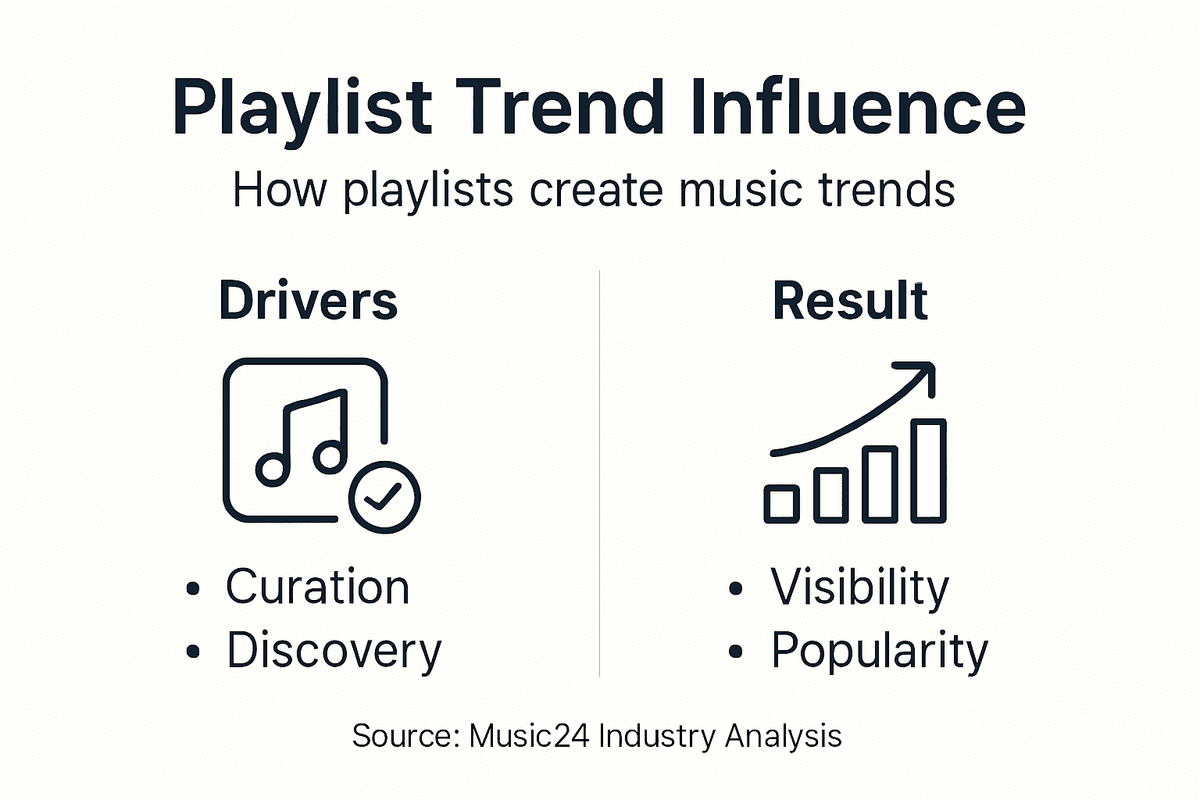
Consider how playlist curation shaped the explosion of Afrobeats globally. In 2015, Afrobeats was thriving within West African communities and select diaspora audiences. But it wasn't truly international. Editorial curators at streaming platforms began featuring Afrobeats tracks alongside Latin trap and dancehall on cross-genre playlists. They positioned Afrobeats not as a regional sound but as a global rhythm language. Simultaneously, algorithmic systems picked up on listener behavior, identifying that people who enjoyed reggaeton also enjoyed Wizkid and Burna Boy. User-generated playlists followed, with listeners creating their own cross-cultural playlists. Within 18 months, what was once categorized as an emerging market sound became mainstream global currency. This didn't happen because Afrobeats suddenly became better. The music was always excellent. What changed was curatorial framing. Streaming platforms operate as gatekeepers that shape trends through playlist mediation, and understanding this gatekeeping function is essential for label strategy. Your job is no longer just producing quality music. You must understand which curators control which audiences and how to position your artist within their emerging narrative frameworks.
The mechanism of trend influence operates through several interconnected channels. First, visibility compounds. An artist featured on a high-profile editorial playlist experiences immediate stream spikes. That spike generates data signals that algorithmic systems detect. Within days, the artist appears in algorithmic recommendations to millions of users whose behavior resembles existing listeners. That algorithmic visibility drives independent listeners to add the song to user-generated playlists. Those additions generate secondary data signals that reinforce the artist's algorithmic presence. By week three, the artist has achieved what typically took months of traditional radio promotion. Speed matters because trends have windows. An artist who hits playlist velocity during their optimal release window captures momentum that sustains for months. An artist who misses the curatorial alignment moment may never achieve that acceleration. This is why your A&R team must monitor which curators are paying attention to which sounds months in advance. Curatorial interest precedes algorithmic adoption, which precedes public chart dominance. If you're identifying emerging artists through public data only, you're already six weeks behind labels using private playlist intelligence.
The Curator Power Dynamic
Curators operate with asymmetric power. A handful of editorial teams at major platforms control playlists reaching 50 million listeners monthly. A mid-tier independent curator might maintain playlists reaching 500,000 consistent listeners. Yet those mid-tier curators often discover trends first because they operate closer to niche communities. They feel the shift in listener behavior before it registers at platform level. This creates a discovery hierarchy. Micro-curators identify promising sounds. Mid-tier curators amplify them to engaged communities. Platform curators scale them to mainstream audiences. Your competitive advantage comes from identifying which micro and mid-tier curators are aligning around emerging artists in specific genres and geographic regions before major platforms notice. This is where private playlist data becomes transformative. Traditional A&R relies on industry networks, radio play, and social metrics. Advanced A&R relies on understanding curatorial preference patterns that predict which artists will receive platform support months before that support materializes.
Pro tip: Build a curatorial tracking system that monitors which independent and mid-tier playlist curators are placing the same emerging artist across multiple thematic and genre-blending playlists—this cross-curator adoption pattern predicts platform playlist placement likelihood with 70+ percent accuracy.
Essential Qualities of Effective Playlists
Not every collection of songs qualifies as an effective playlist. The difference between a playlist that drives discovery and one that gets skipped after two tracks comes down to specific qualities that separate curated intent from random assembly. Effective playlists balance thematic coherence with strategic diversity. They tell a story without feeling predictable. They introduce listeners to new artists without alienating them through jarring transitions. Understanding what makes a playlist work at the listener level is crucial because it directly impacts your artist's performance within those playlists. An artist placed on a poorly constructed playlist reaches fewer engaged listeners than that same artist on a well-designed collection. Playlist coherence affects how listeners engage, with factors like track arrangement, popularity distribution, and editing frequency shaping whether listeners complete playlists or abandon them midway. This is why your label's pitch strategy should account for where your artist will sit within a curator's existing playlist architecture, not just whether they get added.
The first quality of effective playlists is narrative flow. A strong playlist moves listeners through an emotional or sonic journey. Track one establishes the mood. Tracks two through five develop it. Mid-playlist, a great curator introduces a subtle shift, maybe a new instrumentation or tempo change, that keeps listeners engaged. The final tracks bring resolution, leaving listeners satisfied rather than exhausted. Compare this to a playlist built purely by algorithm that puts your most radio-friendly track next to an experimental 8-minute ambient piece next to a stripped-down acoustic cover. The listener experiences whiplash. They skip forward. The algorithmic system registers their skip as a negative signal, which hurts the experimental track's visibility even though the problem was curatorial sequencing, not the music itself. Your A&R team should evaluate whether your artist's track sits naturally within the curator's intended narrative arc before celebration. Placement matters less than placement quality. A single track on a curator's flagship playlist with poor sequencing generates fewer downstream plays than the same track on a secondary playlist with thoughtful positioning.
The second quality is coherent diversity. This sounds contradictory, but it's the hallmark of exceptional curation. An effective playlist introduces listeners to artists and sounds they haven't heard before without feeling jarring. A curator accomplishes this through strategic variety in popularity levels and genre markers. If a playlist features only major label artists with massive streaming numbers, it becomes a hits compilation, not a discovery tool. If a playlist features only emerging artists nobody knows, it feels experimental to the point of alienation. Great curators balance established artists people recognize with emerging talent people should discover. They layer in regional sounds, unexpected instrumentation choices, and producers who work outside typical commercial frameworks. This balance creates the conditions where listeners remain engaged and curious. Your emerging artists get the most benefit from playlists with this quality because they're positioned alongside credible reference points that build listener confidence. An emerging trap artist placed next to a well-known producer from the same region gains credibility through association. The same artist buried in a playlist of only experimental underground tracks gains less benefit despite appearing on more playlists.
Why Editing Frequency Matters
Effective playlists maintain structural stability. Constant editing signals instability and inconsistency. When curators edit playlists daily, removing and adding tracks unpredictably, listeners lose trust. They feel less likely to dive deep into recommendations because they fear the playlist will shift before they finish. Conversely, playlists that are edited thoughtfully but infrequently create dependability. Listeners treat them as reliable collections worth exploring fully. For your artists, this means tracks placed on stable, thoughtfully edited playlists accumulate more total plays and more complete listens than tracks on constantly churning playlists. A curator who updates quarterly or semi-annually allows tracks time to breathe. Your artist's track has 8 to 12 weeks of sustained visibility before rotation. Compare that to a curator updating daily, where your track might receive 5 days of featured placement before getting cycled. Effective playlists also maintain appropriate length. Excessively long playlists (120+ tracks) dilute impact and reduce the likelihood listeners discover deep cuts. Playlists between 30 and 80 tracks tend to maximize engagement because listeners can complete them, return to them, and develop genuine familiarity with the full collection. Track length also affects coherence and listener satisfaction, with successful playlists maintaining consistent flow regardless of individual song duration.
Key factors that define effective playlists for artist development:
| Factor | Positive Impact on Artists | Negative Impact if Ignored |
|---|---|---|
| Narrative Flow | Sustains listener interest | Increases skip rates |
| Coherent Diversity | Broadens audience appeal | Reduces perceived relevance |
| Editing Frequency | Maximizes sustained visibility | Causes audience disengagement |
| Playlist Length | Enhances completion rates | Dilutes discovery opportunity |
Pro tip: When pitching your artist to curators, evaluate their playlist's editing frequency and length first—playlists updated quarterly with 40 to 70 tracks typically drive 3 to 5 times more completed listens per artist placement than playlists edited weekly or exceeding 100 tracks.
Strategic Value for Industry Professionals
Playlist placement has become a primary revenue driver and artist development mechanism in modern music business. For your label, understanding the strategic value of curated playlists means recognizing them as multifunctional tools that simultaneously drive streaming revenue, build artist credibility, and provide early-stage talent identification. The economics are straightforward: a single placement on a major streaming platform's editorial playlist can generate 100,000 to 500,000 streams within the first month. At current per-stream rates between $0.003 and $0.005, that translates to $300 to $2,500 in direct streaming revenue from a single playlist placement. But the financial impact extends far beyond direct streams. Playlist placement generates data signals that algorithmic systems amplify. It builds social proof that influences investor decisions, sync licensing opportunities, and touring prospects. An artist who appears on established curated playlists attracts attention from festival bookers, brand partnerships, and international distributors. Curated playlists serve as strategic tools for music marketing and revenue generation, with industry professionals increasingly building dedicated relationships with curators and developing sophisticated pitch strategies. Your competitive edge depends on systematizing this relationship building rather than treating playlist pitching as an ad hoc activity.
The strategic value extends to artist development timelines. Historically, developing an emerging artist required 18 to 36 months of radio promotion, touring, and grassroots marketing before achieving commercial viability. Playlist-driven discovery has compressed this timeline to 6 to 12 months for artists with strong curatorial alignment. An artist can move from unknown to record deal candidate in a single quarter if their music gains traction across the right curator networks. This acceleration creates competitive pressure. Labels that master playlist strategy identify and sign emerging talent before competitors recognize their potential. Labels that ignore playlist mechanics lose artists to more sophisticated competitors. The strategic implication is clear: your A&R team should allocate significant resources to understanding curator preferences, micro-trend identification, and private playlist data analysis. These become your early warning systems for breakout potential. Playlist placement functions as social proof that elevates artist credibility and marketability, which means your pitching strategy should emphasize how playlist placement positions your artist within specific narrative frameworks that resonate with target audiences.
For marketing teams, curated playlists unlock targeted audience reach that traditional advertising cannot match. When your artist appears on a mood-based playlist or genre-specific collection, you reach listeners who have self-identified their preferences. You reach them in a context where they are actively receptive to discovery. Compare this to traditional marketing, where you interrupt listener behavior with ads. Playlist placement aligns with listener intent. This alignment drives higher completion rates, more playlist saves, and more organic playlist additions. Your marketing team can build campaigns around playlist placements, leveraging curator endorsement to amplify visibility. You can coordinate social media messaging, influencer partnerships, and press coverage around key playlist adds. You can track which playlists drive the highest quality listener engagement versus simple stream volume. Playlists that drive listener saves and playlist adds indicate genuine discovery. Playlists that drive passive streams indicate visibility without resonance. This distinction matters because your label's long-term success depends on building genuine fan bases, not chasing temporary stream counts.
Building Your Curator Relationship Strategy
The most successful labels treat playlist strategy as a structured discipline rather than a transactional pitch process. You should build a database tracking which curators control which audiences, their update frequency, their responsiveness to pitches, and their track record of identifying breakout artists. You should develop relationships with curators months before you need them, sharing context about your artists and building credibility with them as a reliable source of quality music. When you pitch, you pitch with data. You show curators how your artist aligns with their existing playlist audience. You demonstrate why their listeners will benefit from discovering your artist. You make their job easier by doing the analytical work they would otherwise have to do themselves.
Your A&R team should also develop expertise in reading curatorial signals. When an independent curator with 100,000 followers adds your artist to three different playlists within two weeks, that signals momentum. When a mid-tier curator reaches out proactively about your artist rather than waiting for a pitch, that signals strong organic interest. When multiple curators in the same geographic region add your artist to local playlists, that signals geographic adoption. These signals predict algorithmic visibility and platform curator interest before they materialize. Your competitive advantage comes from recognizing these signals quickly and acting on them with follow-up marketing, influencer coordination, and strategic press placement.
Pro tip: Create a curator intelligence spreadsheet tracking at least 200 influential curators across your focus genres, noting their update frequency, audience size, geographic focus, and emerging artist success rate—then systematically reach out to curators whose emerging artist placements align with your label's artist profile two months before your anticipated release windows.
Unlock the Power of Curated Playlists with Music24
The article highlights a major challenge faced by music industry professionals today: identifying emerging artists and trends early enough to gain a competitive edge. With curated playlists acting as the heartbeat of music discovery, it is critical to understand the intentional curation strategies and private playlist patterns that traditional public metrics miss. Pain points like tracking cross-genre placements, recognizing micro and mid-tier curator influence, and decoding the timeline from grassroots adoption to editorial validation reveal how difficult it is to act quickly on authentic signals.
Music24.com is specifically designed to solve these problems by offering unprecedented access to anonymized private playlist data. Our platform empowers A&R teams, record labels, and music marketers to detect which rising artists are gaining traction within thousands of independent and influential playlists weeks before they appear on public charts. Dive into detailed insights on genre blending, geographic micro-trends, and curator behavior that help you move from reactive to proactive decisions. If you want to transform your music analytics strategy and turn curated playlist discovery into your greatest asset, take control with tools tailored for the modern music ecosystem.
Discover how Music24.com can sharpen your competitive advantage by decoding playlist curation dynamics and shaping your artist development pipeline.
Explore more at Music24.com and start uncovering emerging music trends today to secure your position ahead of the curve.
Frequently Asked Questions
What is a curated playlist?
A curated playlist is a carefully assembled collection of songs organized to create a specific listening experience, shaped by human judgment and contextual understanding, rather than just random selections or algorithms.
How do curated playlists influence music trends?
Curated playlists influence music trends by actively shaping which artists and sounds gain popularity. When curators feature specific tracks, they signal their relevance, which can lead to broader exposure and acceptance within the music community.
What are the different types of curated playlists?
The three main types of curated playlists are editorial playlists, which are created by professionals; algorithmic playlists, generated by recommendation systems; and user-generated playlists, assembled by individual listeners based on their preferences.
Why are effective playlists important for artist development?
Effective playlists not only enhance listener engagement but also increase an artist's visibility. Tracks included in well-curated playlists can lead to higher completion rates, more organic discovery, and ultimately drive streaming revenue for the artist.
Recommended
- What Is Playlist Curation and Its Impact on Music Discovery - Blog - Music24.com
- Role of Curators in Music Discovery Explained - Blog - Music24.com
- 7 Essential Playlist Curation Tips for Music Industry Pros - Blog - Music24.com
- 7 Examples of Playlist Trends Shaping the Music Industry - Blog - Music24.com
- Expertise | BPE AUDIO

