From Vinyl to Streaming: The History of Music Consumption
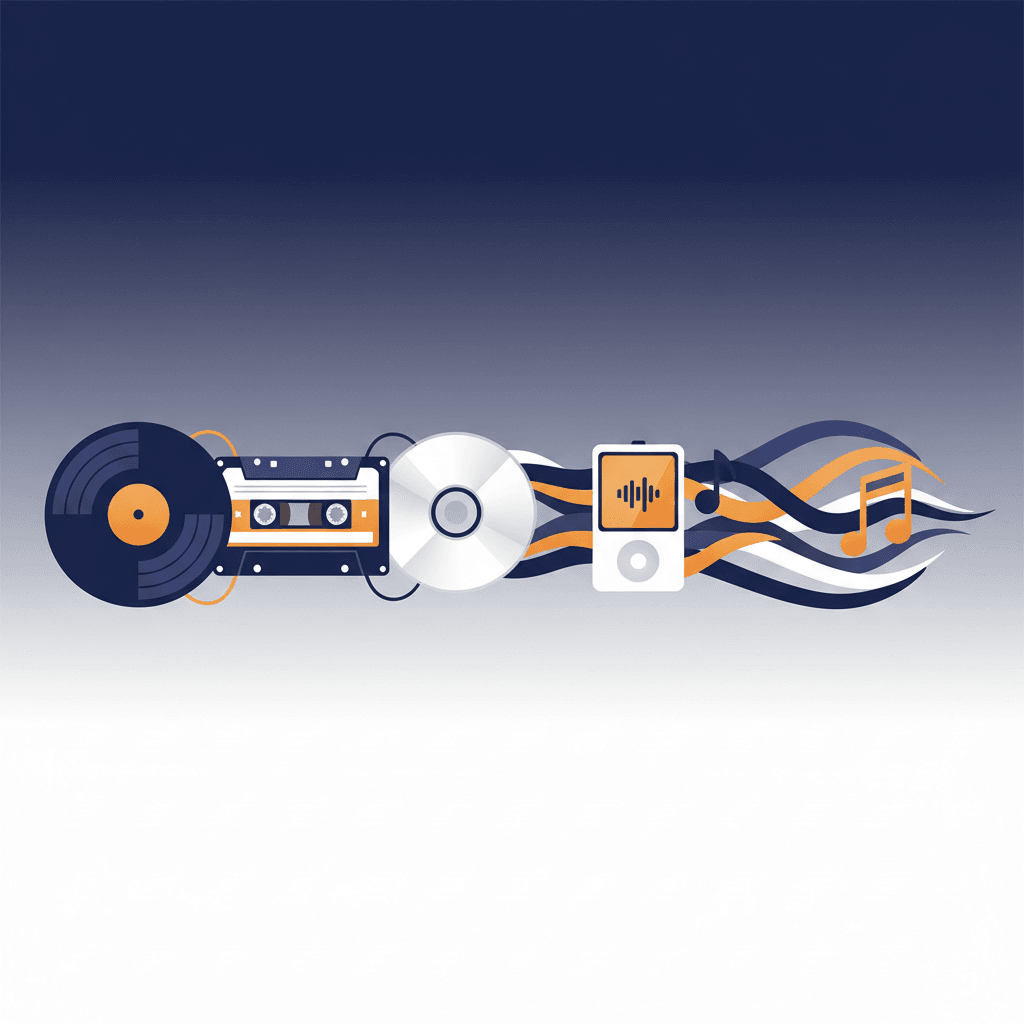
Every format shift in the history of music consumption rewrote the rules for artists, labels, and listeners. Vinyl gave music a physical home. Cassettes made it portable. CDs promised perfection. Digital downloads blew the gates open. Streaming changed everything again. For music industry professionals, understanding this arc reveals patterns that repeat with every new technology cycle. This guide walks through each era, the business models it created, and the lessons that still apply today.
The Vinyl Era: Music Gets a Permanent Address (1948-1970s)
Before vinyl, music lived only in live performance and fragile shellac discs that shattered if you looked at them wrong. The introduction of the 12-inch LP (long play) record in 1948 by Columbia Records transformed how people experienced music. For the first time, artists could sequence 20+ minutes of music per side, giving rise to the album as an art form.
The history of music consumption starts here in earnest. Vinyl created the record store, the album cover as visual art, and the listening ritual of dropping a needle on a groove. Labels built entire business empires around pressing and distributing physical records. Artists like The Beatles and Pink Floyd turned the LP into a canvas for cohesive artistic statements.
For the industry, vinyl established a durable revenue model: manufacture a physical product, distribute it through retail, and collect royalties on every unit sold. That model would dominate for decades.
Key industry impact:
- Album sequencing became an art form and marketing tool
- Record stores created localized discovery ecosystems
- Labels controlled distribution channels completely
- Collectors drove a secondary market that persists to this day
The Cassette Revolution: Music Goes Mobile (1963-1990s)
Philips introduced the compact cassette in 1963, but it took until the late 1970s for the format to reshape music consumption history. The catalyst? Sony's Walkman, released in 1979. Suddenly, music left the living room.
Cassettes democratized both listening and creation. Home taping let fans build mixtapes, a form of personal curation that foreshadowed playlists by decades. Independent artists could duplicate tapes cheaply and sell them at shows, bypassing label gatekeepers entirely.
The music industry famously panicked. The British Phonographic Industry launched its "Home Taping Is Killing Music" campaign in 1981. The skull-and-crossbones logo became iconic. Yet total music revenue continued to climb throughout the cassette era. Sound familiar? Every format transition triggers the same fear cycle.
Key industry impact:
- Portable listening changed when and where people consumed music
- Mixtape culture introduced personal curation at scale
- Independent distribution became viable for the first time
- The industry's first major piracy panic set the template for future debates
The CD Boom: Digital Precision and the Revenue Peak (1982-2000s)
Sony and Philips introduced the compact disc in 1982, and by 1988, CD sales had overtaken vinyl. The music industry entered its most profitable era. CDs cost far less to manufacture than vinyl but carried premium retail prices. Labels re-sold entire back catalogs to consumers who replaced their vinyl and cassette collections with the new format.
Global recorded music revenue peaked at $23.8 billion in 1999, adjusted for inflation. The CD drove that number almost single-handedly. For A&R professionals and label executives, the late 1990s looked like a golden age with no ceiling.
But the CD also planted the seeds of its own disruption. As a digital format, CDs stored music as data. Once consumers had CD-ROM drives in their computers, ripping tracks to MP3 files became trivial. The music industry had handed listeners the tools to separate music from its physical container.
Key industry impact:
- Revenue peaked, creating a benchmark the industry chased for two decades
- Back-catalog re-releases became a major revenue strategy
- Digital audio quality raised consumer expectations permanently
- The CD-to-MP3 pipeline created the conditions for the download era
The Download Disruption: Napster, iTunes, and the Unbundling (1999-2015)
Napster launched in June 1999, and within 18 months, 80 million users had signed up. For the first time in the history of music consumption, listeners could access virtually any song ever recorded without paying. The album as a commercial unit began to fracture.
The industry responded with lawsuits, DRM (digital rights management), and a years-long resistance to digital distribution. Apple changed the equation in 2003 with the iTunes Music Store, offering individual tracks at $0.99. Steve Jobs convinced the major labels that selling songs cheaply beat losing them to piracy entirely.
iTunes proved consumers would pay for digital music if the experience was convenient. By 2012, digital downloads had surpassed physical sales for the first time. But the download model carried a fundamental problem: it still relied on individual transactions. Each song or album required a separate purchase decision, creating friction that a new model would eliminate.
Key industry impact:
- The album unbundled into individual tracks as the default purchase unit
- Piracy forced the industry to rethink distribution from the ground up
- Apple became the dominant music retailer, shifting power away from labels
- Digital storefronts globalized access, removing geographic barriers
The Streaming Age: Access Replaces Ownership (2008-Present)
Spotify launched in Sweden in 2008, offering a radical proposition: pay a monthly fee and access millions of songs instantly. No downloads. No storage. No ownership. Just access.
The transition from ownership to access represents the most fundamental shift in music consumption history. Previous format changes altered how people stored and played music. Streaming changed the relationship itself. Listeners no longer buy music; they rent attention.
For the music industry, streaming reversed the revenue decline that began in 2000. Global recorded music revenue hit $28.6 billion in 2023, surpassing the 1999 peak for the first time. Streaming accounts for over 67% of that total. The business model works, but it distributes value differently than any previous format.
Playlist placement now rivals radio airplay as the primary discovery mechanism. Algorithmic recommendations surface tracks that human gatekeepers would never have championed. Data flows in real time, giving labels and A&R teams visibility into listener behavior at a granular level that vinyl-era executives could never have imagined.
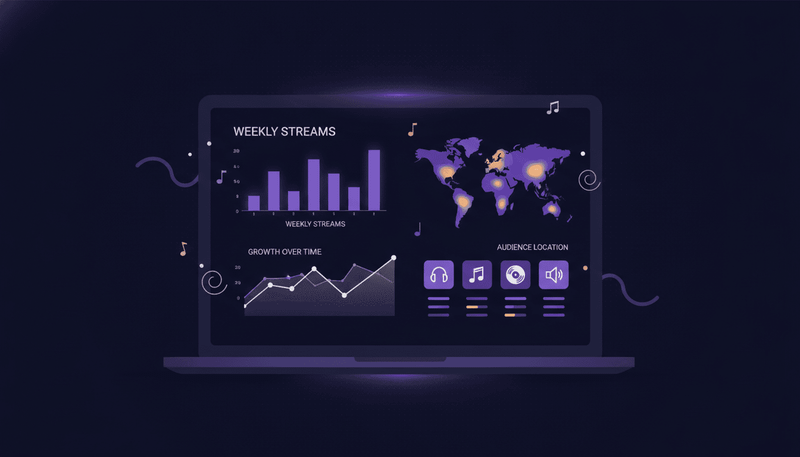
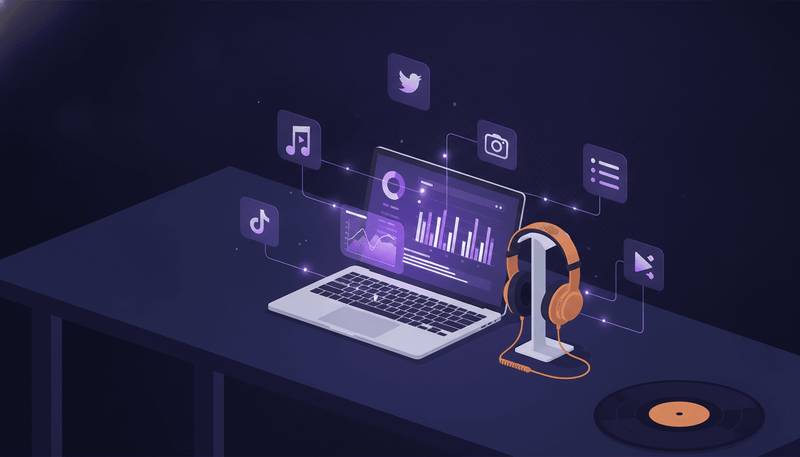
Music24 sits at this intersection, aggregating streaming intelligence across platforms to give professionals the data they need to make informed decisions. Understanding where a track performs, which playlists drive engagement, and how listener demographics shift across regions: this is the currency of the streaming age.
Key industry impact:
- Revenue recovered and surpassed the pre-digital peak
- Playlist curation became a primary driver of discovery and commercial success
- Data and analytics transformed A&R, marketing, and catalog management
- Geographic barriers to distribution effectively disappeared
- Independent artists gained direct access to global audiences
What Each Era Teaches Today's Music Professionals
The history of music consumption follows a consistent pattern. A new technology arrives. Incumbents resist. Early adopters gain an advantage. The business model eventually resets around the new format. Professionals who recognize this cycle early gain a strategic edge every time.
Vinyl taught the industry that packaging and presentation drive perceived value. Cassettes proved that portability and personal curation create new consumption occasions. CDs demonstrated that format transitions generate windfall revenue from back catalogs. Downloads showed that convenience beats control. Streaming confirmed that access at scale wins.
For A&R scouts evaluating new talent, these lessons translate directly into strategy. Artists who understand format-native behavior, like writing for playlist context rather than album sequencing, consistently outperform those who don't. Labels that invest in streaming analytics identify breakout moments weeks before traditional indicators catch up.
Looking Forward: What Comes After Streaming?
Every previous format lasted roughly 15-20 years as the dominant consumption method. Streaming hit mainstream adoption around 2015, putting the industry on a timeline for the next transition sometime in the early 2030s.
Spatial audio, AI-driven personalization, and blockchain-based ownership models all compete for position as the next format shift. None has reached critical mass yet. But the historical pattern suggests that whichever technology makes music consumption more convenient, more personal, and more accessible will define the next era.
Professionals who track these signals now will recognize the inflection point when it arrives. Music24 monitors emerging format trends alongside current streaming data, ensuring you see the shift before it reshapes the market around you.
The history of music consumption proves one thing above all: the only constant is change. The professionals who thrive are the ones who read the data, spot the pattern, and move before the rest of the industry catches up.
Get your music heard. Skip the content grind.
Add a song. Music24 makes the posts and the videos, plans your release and publishes it on every channel. Free for 7 days on the Pro plan, no card.