How to Get Followers on Spotify: 10 Proven Strategies for 2026
Spotify followers are the audience you actually own. This guide covers 10 proven strategies to grow your Spotify following in 2026, from profile optimization and playlist pitching to pre-save campaigns and analytics-driven decisions.

How to Get Followers on Spotify: 10 Proven Strategies for 2026
Spotify followers are the audience you actually own. When someone follows your artist profile, they opt into seeing your new releases in their feed and your music surfaced in their Discover Weekly. Growing your follower count is one of the highest-leverage moves you can make on the platform. This guide covers 10 strategies that work in 2026, with clear actions for each.
Table of Contents
- Why Spotify Followers Matter More Than Streams
- 10 Proven Strategies to Get More Spotify Followers
- How Music24 Helps You Track Follower Growth
- Strategy Comparison Table: Free vs. Paid Growth Methods
- FAQ
Why Spotify Followers Matter More Than Streams
Streams are a lagging indicator. They reflect what happened after discovery. Followers drive what happens next.
When a listener follows your Spotify artist profile, three things happen that streams alone cannot trigger. First, your new releases appear in their Release Radar, a curated playlist Spotify generates weekly for each user based on the artists they follow. Second, you become eligible for their Discover Weekly recommendations. Third, your music signals to Spotify's algorithm that this listener has an active relationship with your work, which increases the likelihood of future placement.
The distinction matters for revenue too. A passive stream from an algorithmic playlist generates fractions of a cent and no lasting connection. A follower who receives your release in their Release Radar and saves it creates a compounding return: more algorithmic exposure, more saves, more saves from other listeners the algorithm considers similar.
Independent artists often obsess over single-track stream counts while ignoring follower growth. The artists who build sustainable Spotify careers treat followers as the metric that predicts long-term performance.
10 Proven Strategies to Get More Spotify Followers
1. Optimize Your Spotify Artist Profile
Your artist profile is the first thing a potential follower sees. It needs to convert.
A complete profile includes a high-resolution artist photo, a bio that is specific about what you sound like and who you are for (not generic), links to your social channels, and an up-to-date Artist's Pick (a pinned track, playlist, or upcoming show). The Artist's Pick placement sits at the top of your profile and drives attention to whatever matters most right now.
Keep your bio under 1,500 characters. Be specific: "Brazilian jazz-funk recorded live in São Paulo" communicates more than "music that moves you." Listeners decide in seconds whether to follow. A complete, specific profile converts those seconds into follows.
2. Release Music Consistently
Consistency is the most underrated follower growth strategy. Every new release pushes a notification to all current followers and refreshes your profile with new content for potential followers to discover.
Artists who release singles every four to six weeks maintain algorithmic momentum between projects. Each release is an opportunity for Spotify's Release Radar to surface your music to followers and a fresh signal to the algorithm that you are active. An artist with six singles released across a year typically accumulates more followers than one who released the same six tracks as a single album.
Consistency also builds listener trust. Followers who see regular releases develop listening habits around your output. That habit is what converts casual followers into superfans.
3. Get on Editorial and Independent Playlists
Playlist placement is the fastest single-event driver of Spotify follower growth. When a new listener hears your track in a playlist and saves it, Spotify's algorithm registers that signal and begins exposing your music to similar listeners. Some of those listeners will follow.
For editorial playlists, pitch through Spotify for Artists at least seven days before your release date. Be specific in your pitch: genre, mood, cultural context, and what makes this track different. Generic pitches get ignored. Specific ones give editorial curators the language they need to place your music correctly.
For independent playlists, research curators whose audiences match your target listener profile. A placement in a smaller, more targeted playlist often outperforms a larger, unfocused one because the listeners are more likely to save and follow. Understanding playlist curation helps you identify which curators move the needle.
4. Promote on Social Media with the Right Hashtags
Social platforms drive listeners from discovery to Spotify profile visit to follow. The path is short, but you have to put your Spotify link in front of the right people.
Short-form video on TikTok and Instagram Reels is the highest-converting social format for Spotify follower growth. A 15 to 30 second clip using your track as the audio, with a call to action to follow on Spotify, consistently outperforms static posts. When your track becomes a TikTok sound, every creator who uses it becomes a distribution channel pointing listeners toward your profile.
Music hashtags increase the reach of your social posts beyond your existing followers. Use a mix of broad genre hashtags (#indierock, #lofi) and niche community hashtags that reach listeners actively looking for new music in your style.
5. Collaborate with Other Artists
Collaboration is one of the few tactics that delivers exponential rather than additive follower growth. A feature, a split single, or a joint release exposes your music to another artist's entire established following.
Choose collaborators whose audience overlaps meaningfully with your target listeners, not just artists with larger followings. A collaboration with a well-matched smaller artist often converts more followers than a feature with a mismatched larger one. Shared aesthetic and genre is what drives conversion.
After release, both artists should actively promote the collaboration to their respective audiences. Cross-tagging, shared social posts, and playlist cross-promotion maximize the follower growth opportunity on both sides.
6. Use Pre-Save Campaigns
Pre-save campaigns convert listener interest into algorithmic signals before your release even goes live. A listener who pre-saves your release tells Spotify to automatically add it to their library on release day. That adds up to a burst of saves and streams in the first 24 to 48 hours.
First-day performance metrics influence Spotify's algorithmic playlisting decisions. A strong pre-save campaign can increase your chances of editorial playlist consideration and Release Radar placement for your followers.
Run pre-save campaigns through your distributor's built-in tools or a third-party service. Promote the pre-save link two to four weeks before release through social media, email to your subscriber list, and direct outreach to your most engaged followers.
7. Engage Your Existing Fan Base
Your current followers are the most efficient growth channel you have. Every engaged follower who recommends your music to a friend represents zero ad spend.
Make it easy for followers to become advocates. Share playlist embed links that your audience can repost. Create social content that followers want to tag friends in. Reply to comments and messages to build personal connections that translate into word-of-mouth recommendations.
Identifying your most engaged followers, the listeners who save every release, attend shows, and share your music voluntarily, and giving them early access, exclusive content, or direct acknowledgment turns passive supporters into active promoters.
8. Use Analytics to Guide Your Strategy
Growth without measurement is guessing. Every decision, what to release, when to release it, which playlists to prioritize, and which social platforms to invest in, should be informed by data.
Spotify for Artists provides streaming data, playlist placement tracking, audience demographics by city, and follower growth trends. Use this data to identify: which tracks are driving the most new followers, which cities have the highest listener-to-follower conversion rates, and which playlists are generating saves versus passive streams.
The artists who grow fastest on Spotify use this data to double down on what is working and cut what is not, rather than treating every release as a reset.
9. Pitch to Playlist Curators
Independent playlist curators are direct channels to listeners who are actively seeking new music in your genre. A strategic pitching practice, targeting the right curators with the right tracks at the right moment, is one of the most efficient ways to reach new potential followers.
Research curators whose playlists match your sound profile. Check follower counts, but also check engagement quality: playlists with high save-to-listen ratios are worth more than high-follower playlists where listeners stream passively and move on. Understanding the role of music curators helps you identify which placements will actually convert to followers.
Personalize every pitch. A curator who receives 500 identical submission emails per week ignores all of them. A pitch that references a specific track in their playlist and explains why your submission fits gets read.
10. Cross-Promote Across Streaming Platforms
Your Spotify followers do not all live on Spotify. Some of your most dedicated listeners may primarily use Apple Music, YouTube, Amazon Music, or a regional DSP. Cross-platform promotion expands your discovery surface area and routes listeners back to Spotify.
Promote your Spotify profile link in your bio on all social platforms. Embed Spotify plays in your website. Include Spotify follow links in email newsletters. When you appear on podcasts, radio, or live streams, direct listeners to your Spotify profile explicitly.
Every platform where you maintain a presence is a potential source of Spotify follower growth, as long as you make the path clear.
Where Music24 fits
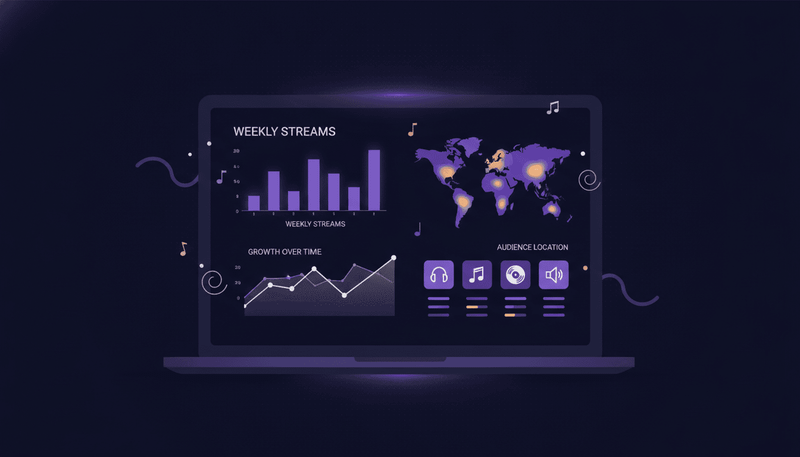
Music24 is built for the work around a release. Add a song and it makes the posts and the videos, plans the rollout and publishes to TikTok, Instagram, YouTube, Facebook and Threads. Every song also gets one link page with pre-save, so fans are waiting on release day. Its analytics put your Spotify for Artists, YouTube and social numbers in one place, with each post next to the streams of the day it went out, so you can see what actually moved.
Start free with Music24: 7 days of the Pro plan, no card, then a Free plan for as long as you like.
Strategy Comparison Table: Free vs. Paid Growth Methods
| Strategy | Cost | Time to Results | Follower Conversion | Best For |
|---|---|---|---|---|
| Optimize artist profile | Free | Immediate | Medium | All artists — foundational |
| Consistent releases | Free (production costs aside) | 2–6 months | High (compounding) | Artists with release pipeline |
| Editorial playlist pitching | Free | 2–6 weeks | High (when placed) | Pre-release planning |
| Social media promotion | Free (time investment) | 2–8 weeks | Medium | Artists with social audience |
| Collaboration | Free (time + relationship) | 1–4 weeks post-release | High (matched audience) | Artists with peer network |
| Pre-save campaigns | Free (tools available) | Release day burst | Medium | Artists with existing email list |
| Audience engagement | Free | Ongoing | High (word of mouth) | Artists with active fanbase |
| Analytics-guided strategy | Free (Spotify for Artists) + optional paid tools | Ongoing | Variable | All artists |
| Independent playlist pitching | Free (SubmitHub credits optional) | 1–4 weeks | Medium to High | Niche genre artists |
| Cross-platform promotion | Free | Ongoing | Low to Medium | Artists on multiple platforms |
| Paid playlist promotion | $50–$500/campaign | 1–2 weeks | Low to Medium | Artists with marketing budget |
| Paid social ads | Variable ($5/day+) | 1–2 weeks | Low to Medium | Artists with ad creative |
| PR and blog coverage | Variable | 2–6 weeks | Low | Artists targeting press coverage |
The most consistent follower growth comes from combining free foundational strategies (profile optimization, consistent releases, playlist pitching) with data-guided decision-making. Paid methods accelerate growth but rarely substitute for the organic signals that drive algorithmic placement.
For a complete view of the best music marketing tools to support your Spotify growth strategy, including analytics, social scheduling, and email platforms, see our full comparison guide.
FAQ
How do you get followers on Spotify?
The most effective ways to get Spotify followers: optimize your artist profile, release music consistently, get on editorial and independent playlists, promote on social media with relevant hashtags, collaborate with other artists, run pre-save campaigns, and pitch to playlist curators whose audiences match your genre.
Why are Spotify followers important?
Spotify followers directly affect your algorithmic reach. When someone follows your profile, your new releases appear in their Release Radar and you become eligible for their Discover Weekly recommendations. Followers create compounding growth: each new follower increases the algorithmic surface area for future releases.
How long does it take to grow Spotify followers?
Organic Spotify follower growth typically takes 3 to 12 months of consistent effort to build meaningful momentum. Playlist placements can drive spikes in days. Social media campaigns may show results in 2 to 8 weeks. Consistent releasing and audience engagement compound over months and years into sustainable growth.
Does buying Spotify followers work?
No. Purchased followers are not real listeners. They do not save your music, stream your tracks, or generate the engagement signals that Spotify's algorithm rewards. They may temporarily inflate your follower count but will not improve algorithmic placement, playlist consideration, or revenue. Focus on organic strategies that attract genuine listeners.
How do playlist placements help Spotify follower growth?
When a listener discovers your track in a playlist and saves it, Spotify registers that signal and surfaces your music to similar listeners. Some of those listeners visit your profile and follow. Editorial playlist placements reach the largest audiences; independent playlist placements in well-matched niche playlists often convert to followers at higher rates.
What is the difference between Spotify streams and Spotify followers?
Streams measure how many times your music was played. Followers represent listeners who have opted in to your releases and profile. Followers drive future algorithmic exposure through Release Radar and Discover Weekly, while streams reflect past performance. Follower growth is a leading indicator of sustainable audience development; streams are a lagging one.
Get your music heard. Skip the content grind.
Add a song. Music24 makes the posts and the videos, plans your release and publishes it on every channel. Free for 7 days on the Pro plan, no card.